

Most companies that violated PPP rules don’t even know they did. Just Ask This Southwick Company: |
Uncovering the Unseen: How a Southwick Company Unknowingly Broke PPP Rules |
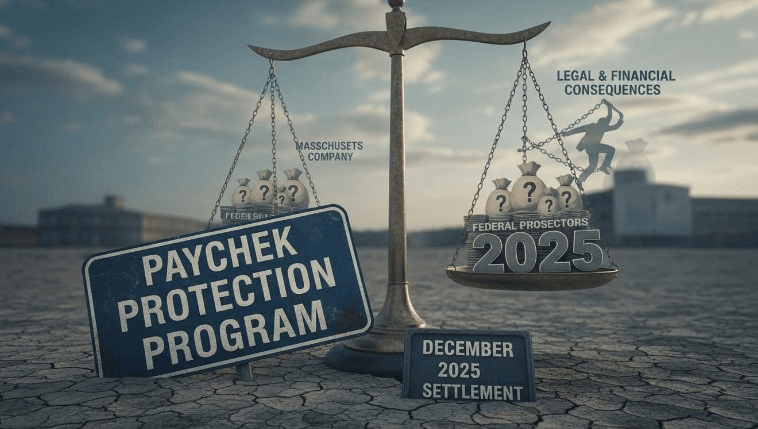
A Massachusetts company's December 2025 settlement with federal prosecutors demonstrates that Paycheck Protection Program fraud enforcement remains active years after the pandemic ended. Businesses that misstated employee counts, particularly by excluding parent company workers, continue facing serious legal and financial consequences. Kokusai Denki Electric America, Inc. (formerly Hitachi Kokusai Electric Comark, LLC), a Southwick company, agreed to pay approximately $2 million to resolve False Claims Act allegations. Federal prosecutors claimed the company improperly certified eligibility for a Second Draw PPP loan by reporting fewer than 300 employees while failing to count workers at its parent company. When those affiliate employees were included, the total exceeded the 300 employee eligibility threshold. The company received its loan in 2021 during the Second Draw phase of the PPP program and later obtained full forgiveness. A whistleblower lawsuit brought the alleged violations to light, triggering a government investigation that culminated in the settlement announced in December 2025. This case illustrates why understanding affiliate rules matters, how investigators detect PPP violations, and what steps businesses should take now to verify their own compliance. (Continued below)
Why PPP Affiliate Rules Create Compliance ChallengesThe Paycheck Protection Program, created in 2020 to help businesses survive pandemic shutdowns, included strict size requirements to ensure funds reached truly small businesses. These requirements extended beyond simply counting your own employees. PPP eligibility rules required applicants to count employees from all affiliates, including parent companies, subsidiaries, and other entities under common ownership or control. The Small Business Administration designed these rules to prevent large corporations from accessing programs meant for small businesses. Affiliation can arise through several relationships. Majority ownership creates automatic affiliation. If another company owns 50% or more of your business, you must count their employees. Common management or shared board members can also establish affiliation. Even minority ownership combined with control rights can trigger affiliate status under certain circumstances. For Second Draw PPP loans specifically, the limit was 300 employees total. This meant counting everyone working for you plus all employees at affiliated entities. Many businesses misunderstood these requirements during the program's rushed rollout in 2020 and 2021. The complexity of affiliate rules created widespread confusion. A subsidiary might not realize it needed to count parent company employees in another country. A company with multiple sister entities under a holding company structure might miss the requirement to aggregate all employee counts. These honest mistakes, however, do not eliminate legal liability when discovered years later. How Federal Investigators Detect PPP ViolationsThe government employs multiple methods to identify potential PPP fraud, making detection likely even years after loans were forgiven. Employee count discrepancies trigger many investigations. The SBA can compare PPP applications to quarterly tax filings, unemployment insurance reports, and other government databases. Significant differences between these sources raise immediate red flags for investigators. Undisclosed affiliate relationships also attract scrutiny. Federal investigators can discover parent companies, subsidiaries, and sister companies through corporate records, securities filings, and business registration databases. If you failed to count affiliate employees, investigators will eventually find the connection through routine data matching. Inconsistent information across multiple applications creates additional problems. If you applied for both First Draw and Second Draw PPP loans with different employee counts, investigators will question why the numbers changed. Your figures should remain consistent unless you can document legitimate changes like layoffs, hiring, or business restructuring. Whistleblower tips remain one of the most common ways fraud comes to light. The False Claims Act allows private citizens to file lawsuits on behalf of the government when they have knowledge of fraud. Employees, former employees, competitors, and business partners all file these qui tam lawsuits. Anyone with inside knowledge can become a whistleblower. The financial incentives for whistleblowers are substantial. They typically receive 15% to 25% of the recovery if the government intervenes in their case. If they proceed without government intervention, they can receive 25% to 30% of any recovery. On a $2 million settlement, even a 15% share equals $300,000. Random audits by the SBA Office of Inspector General add another layer of enforcement. Even if nothing triggered specific suspicion, your company might be selected for review. Having proper documentation ready is essential regardless of whether you expect scrutiny. Crock-Pot 20-Ounce Electric Lunch Box
Consequences Extend Beyond Financial PenaltiesPaying money to settle a PPP fraud case represents only one potential consequence. The government reserves several other enforcement options even after civil settlements. Criminal prosecution remains possible after civil settlements. Settlement agreements typically state that civil payments do not protect companies or individuals from criminal charges. If prosecutors believe the fraud was intentional, they can still file criminal cases. Some PPP fraud prosecutions have resulted in prison sentences of seven years or more for executives who deliberately defrauded the program. Debarment from government contracts poses another serious risk. Federal agencies can ban companies and individuals from receiving government contracts for years. This sanction can destroy businesses that rely on government work and damage reputations even for companies that do not currently hold federal contracts. Tax consequences add to the financial burden. The IRS can pursue additional penalties and interest related to the fraud. Settlement payments are generally not tax deductible, which increases the real cost of resolving these cases. You pay the settlement from after-tax dollars while potentially facing additional tax penalties. Reputational damage affects business relationships in ways that extend far beyond the settlement amount. Customers, suppliers, and lenders all see news about fraud settlements. You may lose business opportunities, face higher borrowing costs, or struggle to attract quality employees after a fraud settlement becomes public knowledge. Individual liability for company officers and employees creates personal risk separate from corporate penalties. Settlement agreements typically state they do not release individuals from liability. Executives who signed false certifications can face personal lawsuits and criminal charges even after the company settles its case. Conducting a PPP Compliance AuditIf your company received a PPP loan, conducting an internal compliance audit can identify problems before the government does. This proactive approach gives you the opportunity to fix issues voluntarily, which significantly reduces potential penalties. Start by gathering all your PPP loan documents. Collect your original applications, supporting documentation, forgiveness applications, and any correspondence with your lender or the SBA. Review what you certified and what documents you provided to support those certifications. Verify your employee count was accurate. Count all employees on your payroll during the relevant period. Use the same methodology the SBA requires, which typically means full-time equivalent employees or actual headcount depending on your loan type. Document exactly how you calculated this number. Identify any affiliates you should have included. Research your ownership structure thoroughly. Look for parent companies, subsidiaries, and sister companies. Examine relationships involving shared ownership, common management, shared board members, and common investors. Any of these relationships might create an affiliate under SBA rules. Add up all affiliate employees to determine your total count. Use the same time period and methodology for affiliate employees as you used for your own. Compare this total to what you reported on your PPP application. Even a small discrepancy requires explanation. Compare your PPP application to other government filings. Pull your quarterly tax returns, unemployment insurance reports, and any other documents showing employee counts. Look for significant differences that might indicate an error on your PPP application. Document your findings in writing. Create a memo that explains what you found, how you calculated employee counts, and whether any discrepancies exist. If you discover errors, write down what went wrong and why. This documentation will be valuable if you need to make a voluntary disclosure to the government. Consider hiring outside help for this audit. An attorney experienced in PPP compliance can spot issues you might miss. They can also help you understand your options if you find problems. The cost of legal advice is far less than the cost of getting caught in a fraud investigation without having taken corrective action.
What to Do If You Discover Compliance IssuesDiscovering a problem with your PPP loan can be frightening, but taking the right steps immediately can minimize damage and potentially avoid criminal prosecution. Stop and consult an attorney before doing anything else. Do not contact the SBA, your lender, or anyone else about the problem yet. An experienced attorney can help you understand your situation and develop a strategy. Attorney-client privilege protects your conversations, allowing you to speak freely about the problem without creating evidence that could be used against you. Your attorney will help you decide whether to make a voluntary disclosure. The Department of Justice maintains cooperation guidelines that reward companies coming forward before the government discovers problems. Voluntary disclosure can reduce your penalties by 50% or more compared to what you would face if investigators find the issue first. If you decide to disclose, your attorney will contact the appropriate government office. This is usually the local U.S. Attorney's Office or the SBA Office of Inspector General. Your attorney will present the facts, explain what went wrong, and propose a resolution that addresses the violation while minimizing penalties. Cooperation with the investigation becomes essential after disclosure. You will need to provide documents, answer questions, and possibly allow interviews with employees. Your attorney will guide you through this process while protecting your rights and limiting your exposure to additional liability. Be prepared to repay the loan with interest. Even with cooperation credit, you will need to return the money you received improperly. The government will also likely seek some additional penalties, though these should be reduced significantly compared to non-cooperative cases. Consider the timing carefully. The longer you wait after discovering a problem, the less credit you receive for voluntary disclosure. However, rushing forward without proper legal advice can make things worse. Work with your attorney to move quickly but strategically. Understanding the 10 Year Enforcement WindowPPP fraud enforcement will continue for many years under the extended statute of limitations Congress established specifically for pandemic relief fraud. The PPP and Bank Fraud Enforcement Harmonization Act of 2022 established a 10 year statute of limitations for PPP fraud. This means the government has until 2031 or later to pursue cases involving loans made in 2021. For First Draw loans made in 2020, the window extends into 2030. This extended timeframe gives investigators ample opportunity to identify violations through data analysis, whistleblower tips, and random audits. The government is not rushing to close these cases. Federal prosecutors continue announcing new PPP fraud settlements regularly throughout 2025, nearly four years after the program ended. The 10 year window also means that problems you think are safely in the past could resurface years from now. A whistleblower might come forward in 2028 with information about your 2021 loan. The SBA might select your loan for audit in 2029. Waiting and hoping the issue goes unnoticed is not a viable strategy. Taking action now to verify compliance or make voluntary disclosures is far better than waiting for an investigation to find you. The cooperation credit available for voluntary disclosure diminishes over time. Coming forward in 2025 demonstrates better faith than waiting until 2028 when investigators are already asking questions.
Reporting PPP Fraud as a WhistleblowerIf you have information about PPP fraud at another company, you might be able to file a qui tam lawsuit under the False Claims Act. This process allows you to help the government recover stolen funds while receiving a financial reward. You need original information to qualify as a whistleblower. This means information the government does not already have from public sources. Inside knowledge from working at the company provides ideal foundation for qui tam cases. Documents proving the fraud strengthen your case significantly. Find an experienced qui tam attorney before filing anything. These cases are complex and require specialized knowledge. Most qui tam attorneys work on contingency, meaning they only get paid if you win. They typically receive a percentage of your whistleblower reward. Your attorney will investigate your claims before filing. They will gather additional evidence, interview witnesses if possible, and research the legal issues. This preparation is essential because qui tam cases must meet strict requirements to proceed. The lawsuit gets filed under seal in federal court. This means it stays secret while the government investigates. You cannot tell anyone about the case during this period, which often lasts 12 to 24 months or longer. Violating the seal can destroy your case and eliminate your potential reward. The government will investigate your allegations thoroughly. They will issue subpoenas, review documents, and interview witnesses. Your attorney will cooperate with government lawyers throughout this process. If the government finds merit in your case, they will either take it over or let you continue. Government intervention usually leads to better results because federal prosecutors have more resources and authority. However, whistleblowers can proceed on their own if the government declines to intervene. Your reward depends on several factors. If the government intervenes, you typically receive 15% to 25% of the recovery. If you proceed without government intervention, you can receive 25% to 30%. The court determines the exact percentage based on your contribution to the case and other factors. Taking Action to Protect Your BusinessThe Southwick settlement demonstrates that PPP fraud enforcement remains a government priority years after the pandemic. Understanding these rules and verifying your compliance protects your business from costly mistakes. Review your PPP loan documents within the next 30 days. Gather your applications, supporting materials, and forgiveness documents. Read what you certified and verify it was accurate. This review takes only a few hours but could save you from serious penalties. Verify your employee count was correct. Count all employees during the relevant period. Identify any affiliates and count their employees too. Compare your total to what you reported on your application. Document your calculations in writing. Consult an attorney if you find any discrepancies. Do not try to fix problems on your own or contact the SBA directly. An experienced attorney can help you understand your options and minimize potential penalties. The cost of legal advice is far less than the cost of getting caught in a fraud investigation. Consider voluntary disclosure if you made errors. The DOJ's cooperation guidelines provide significant penalty reductions for companies that come forward. Your attorney can guide you through the disclosure process and negotiate with the government on your behalf. Implement better compliance procedures going forward. Even if your PPP loan was correct, you likely apply for other government programs or contracts. Strong compliance procedures prevent future problems. Document your processes and train your staff on proper procedures. The 10 year statute of limitations means enforcement will continue through 2031 for the most recent PPP loans. Taking action now to verify compliance or report fraud is far better than waiting for an investigation to find you. Your business deserves protection from the serious consequences of PPP fraud allegations. |




 |

Did You Enjoy This Article? 📰 If you found this piece engaging, subscribe to The 413 Insider! Join our community today and be part of the conversation!
As an Amazon Associate the owner of this site may earn commissions from qualifying purchases. The owner of this newsletter may earn commissions on affiliate links or lead generation advertisements in emails and in articles. Possible earnings do not impact reporting or reviews in any way. (it's how we keep the lights on!) The 413 Insider Newsletter R.E.L. Media Group 1690 Boston Rd #1075 ,Springfield Massachusetts 01129
|
0 Comments
Join the conversation
Be the first to comment
Share your thoughts above.