

Massachusetts winters don't just change the scenery, they completely rewrite the rules of safe driving. |
Navigating the treacherous roads of Western Mass during a winter storm: tips and advice for safe driving. |
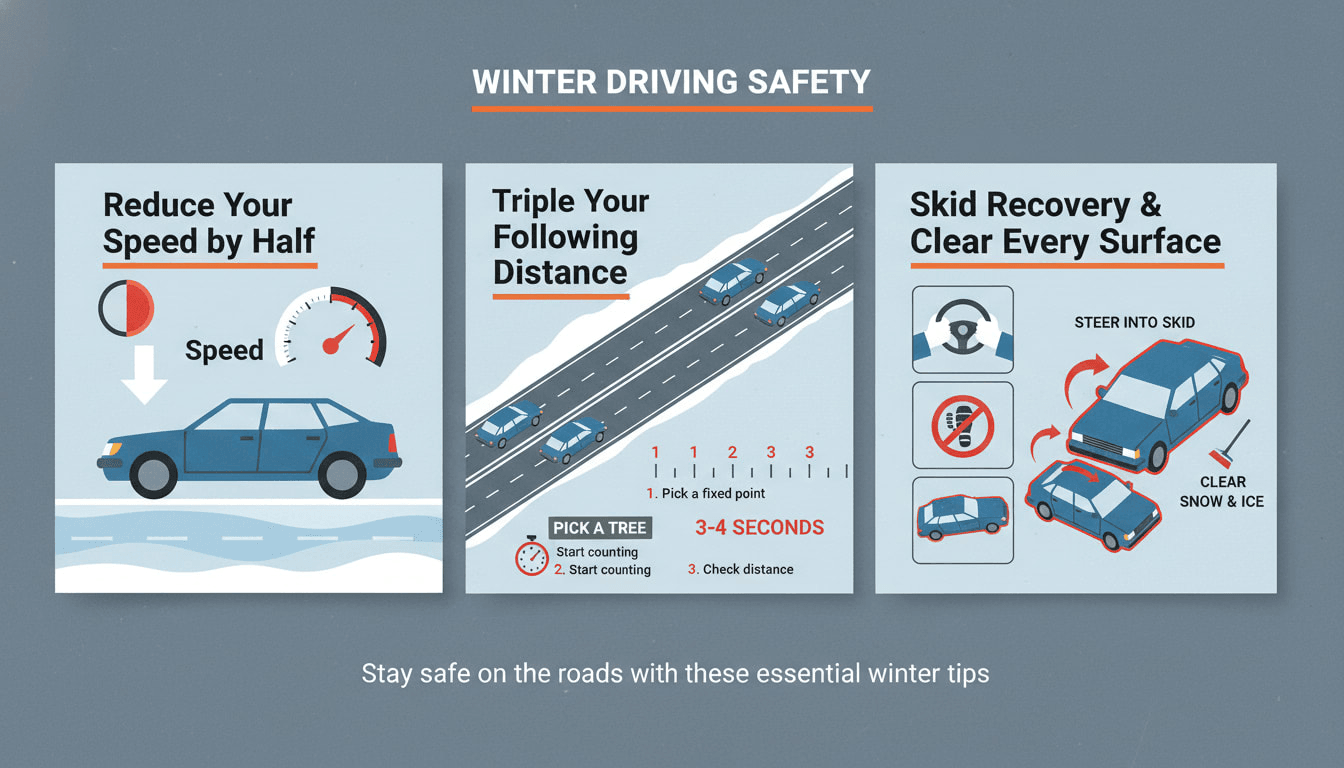
Your tires lose up to 90 percent of their grip on ice compared to dry pavement. What normally takes 100 feet to stop can require 300 feet or more on icy roads. That three-second following distance you use in summer? Winter demands eight to ten seconds between you and the vehicle ahead. Winter storms transform Massachusetts roads into treacherous surfaces where a single mistake can lead to disaster. With over 1.2 million weather-related crashes occurring across the United States each year, knowing how to navigate snow and ice isn't just helpful, it's essential for survival. Massachusetts drivers face unique challenges during winter months. Black ice forms without warning on bridges and overpasses. Snowplows work around the clock, yet roads remain slippery for hours after storms pass. Understanding how to adapt your driving can mean the difference between arriving safely and becoming another statistic. Reduce Your Speed by HalfSpeed limits are designed for ideal conditions. When snow covers the pavement or ice lurks beneath a thin layer of slush, those posted numbers become dangerously optimistic. Cut your speed in half during winter storms. If you normally drive 40 mph on a residential street, drop to 20 mph when snow falls. On highways where 65 mph is standard, consider 30 to 35 mph during active storms. This isn't overcautious. Your tires lose up to 90 percent of their grip on ice compared to dry pavement. What normally takes 100 feet to stop can require 300 feet or more on icy roads. Triple Your Following DistanceThe three-second rule works fine in summer. Winter demands eight to ten seconds between you and the vehicle ahead. Here's how to measure it. Pick a fixed object like a sign or tree. When the car ahead passes it, start counting: "one thousand one, one thousand two." You should reach eight before passing the same object. This extra space gives you time to react when the driver ahead brakes suddenly or hits a patch of ice. It also prevents the dangerous chain reactions that cause multi-vehicle pileups during storms. Master the Art of Gentle MovementsYour steering wheel, gas pedal, and brake pedal all need a lighter touch in winter. Abrupt inputs break the fragile connection between your tires and the road. Accelerate as if you have a cup of hot coffee on your dashboard that you don't want to spill. Press the gas pedal slowly and steadily. The same applies to braking. Start slowing down twice as early as you normally would, applying gentle, consistent pressure. When turning, reduce your speed before entering the curve. Trying to slow down mid-turn on ice often triggers a skid. Know What to Do When You SkidEven careful drivers lose traction occasionally. Your response in the first two seconds determines whether you regain control or spin out. If your rear wheels slide out (the back of your car swings sideways), steer in the direction you want the front of the car to go. If you're sliding right, turn right. This feels counterintuitive but works. If your front wheels lose grip (you turn the steering wheel but nothing happens), ease off the gas and straighten the wheel slightly. Don't brake hard. Once the front tires regain traction, gently steer toward your intended path. Never slam the brakes during a skid. This locks your wheels and eliminates any remaining control. Clear Every Surface Before DrivingMassachusetts law requires drivers to remove snow and ice from their vehicles. Failing to do so can result in fines, but the real danger is to other drivers. Snow flying off your roof at highway speeds becomes a blinding cloud for the driver behind you. Ice chunks can shatter windshields. One Massachusetts storm weekend saw nearly 500 crashes, many caused by reduced visibility. Clear your entire car: roof, hood, trunk, all windows, mirrors, and lights. Use a snow brush with an extendable handle for the roof. Turn on your defroster and let the engine warm up for a few minutes to loosen stubborn ice. Budget an extra 10 to 15 minutes for this task before every winter trip. Watch for Black Ice on Bridges and OverpassesBlack ice forms when temperatures hover around freezing and moisture on the road freezes into a nearly invisible layer. Bridges and overpasses freeze first because cold air circulates above and below the surface. You can't always see black ice. The road looks wet, not frozen. Watch for these warning signs: the pavement appears darker and shinier than surrounding areas, other cars seem to be sliding slightly, or your steering feels unusually light and unresponsive. When you suspect black ice, don't brake or turn sharply. Maintain steady speed and direction until you're past the danger zone. Prepare Your Vehicle Before Winter ArrivesYour car needs specific adjustments to handle Massachusetts winters safely. Check your tire tread depth using the penny test. Insert a penny into the tread with Lincoln's head upside down. If you can see the top of his head, your tires are too worn for winter driving. Consider winter tires if you drive frequently in storms. They maintain flexibility in cold temperatures that all-season tires lose below 45 degrees. Test your battery. Cold weather reduces battery capacity by up to 60 percent. A battery that starts your car easily in summer may fail on a 10-degree morning. Replace windshield wipers if they streak or skip. Fill your washer fluid reservoir with winter formula rated to negative 20 degrees. Summer fluid freezes and leaves you blind in the middle of a storm. Build a Winter Emergency KitEven prepared drivers get stranded. A winter emergency kit can sustain you for hours if you slide off the road or get stuck in traffic during a blizzard. Essential items include a blanket or sleeping bag, flashlight with extra batteries, first aid kit, bottled water, non-perishable snacks like granola bars, phone charger, small shovel, ice scraper, and jumper cables. Add a bag of sand or cat litter for traction if your wheels spin on ice. Include a bright cloth to tie to your antenna so rescuers can spot your car in heavy snow. Store everything in a plastic bin in your trunk. Check supplies monthly and replace items before they expire. When to Stay HomeSometimes the safest driving decision is not to drive at all. If the Massachusetts Emergency Management Agency issues a travel ban, stay off the roads. These bans happen during severe storms when even emergency vehicles struggle. Watch for these conditions that make driving extremely dangerous: visibility less than a quarter mile, ice accumulation on power lines and trees, wind gusts above 40 mph combined with snow, or temperatures below 10 degrees with active precipitation. Your destination can wait. No appointment or errand is worth risking your life on roads where even experienced drivers lose control. Winter driving in Massachusetts demands respect for the weather and honest assessment of your skills. These eight strategies reduce your risk, but they can't eliminate it entirely. Stay alert, drive defensively, and give yourself permission to delay travel when conditions deteriorate beyond safe limits. Did You Enjoy This Article? 📰 If you found this piece engaging, subscribe to The 413 Insider! Join our community today and be part of the conversation! |
0 Comments
Join the conversation
Be the first to comment
Share your thoughts above.